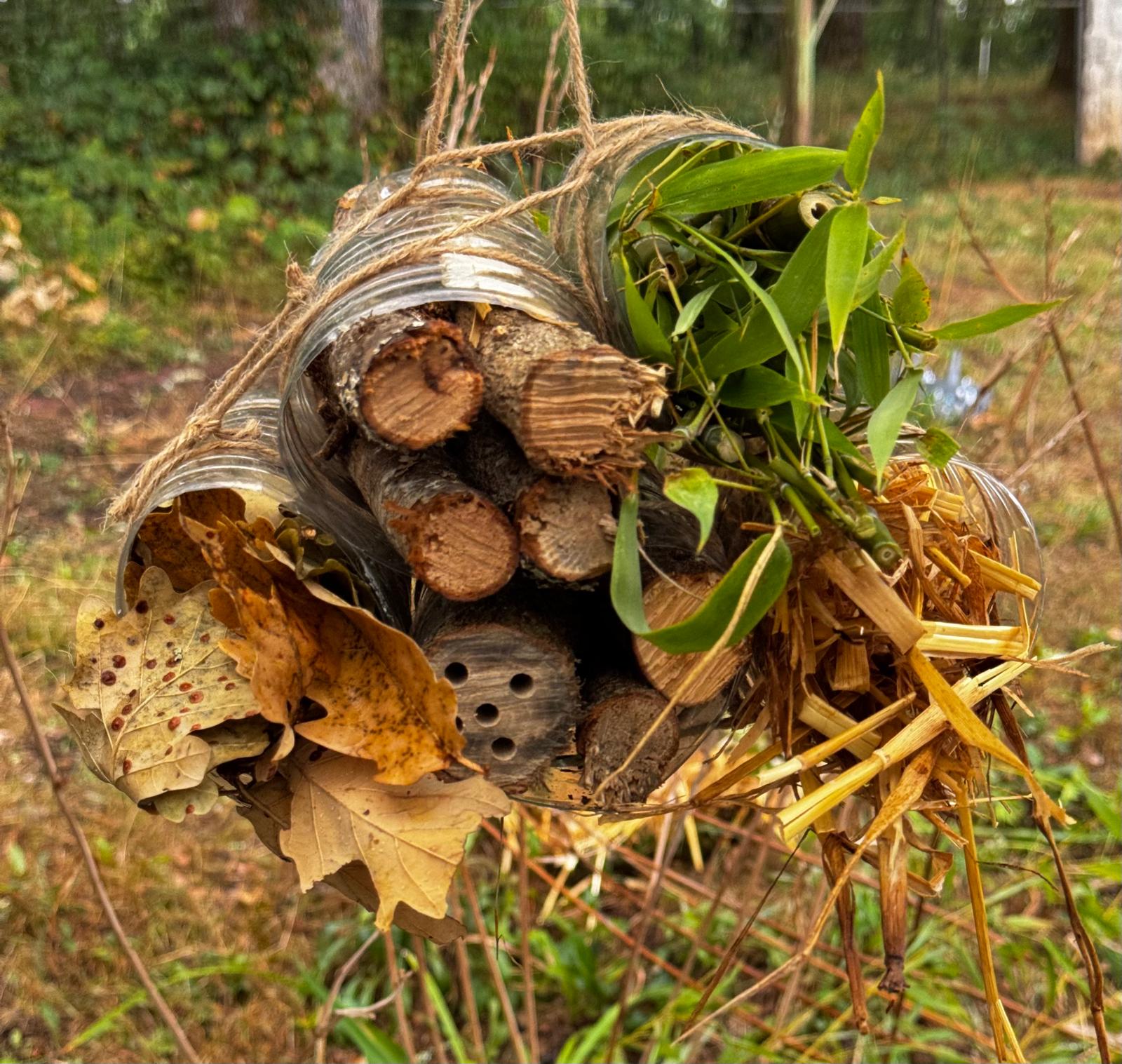
How to Make an Insect Hotel
Making an Insect Hotel: A Home for the Tiny Things
Here at La Ferme du Bourdicou, we’re always looking for simple ways to encourage more wildlife and biodiversity around the farm. Sometimes the smallest creatures are the easiest to overlook.
One of our favourite little projects is making an insect hotel: simply a collection of natural materials arranged to provide shelter and nesting spaces for insects. It doesn’t need to be complicated or expensive; in fact, many of the best materials can be found around the garden or rescued from things that would otherwise be thrown away.
Why make an insect hotel?
Insects are an important part of a healthy ecosystem. Bees and other pollinators help our flowers, fruit and vegetables, while other insects break down organic matter and form part of the food chain for birds and other wildlife.
Providing places for insects to shelter and nest is one way of making our gardens and growing spaces more wildlife-friendly. It’s also a great excuse to get outside and have a rummage around the garden.
What can you use?
You don’t need to buy special materials. Look around your garden first. We used a mixture of recycled and natural materials, including:
- Clean, recycled plastic bottles
- Hollow canes and plant stems
- Pieces of untreated wood
- Pine cones
- Bark
- Dry grasses
- Small twigs
- Dead wood
- Other dry natural materials
The key is variety. Different insects like different types of spaces, so having holes and cavities of different sizes makes the hotel useful to a wider range of visitors. If you’re using hollow stems or drilled pieces of wood, aim for a mixture of openings, roughly 2 to 3 mm, 4 to 5 mm, 6 to 8 mm and 8 to 10 mm.
Solitary bees prefer tunnels that are smooth inside and closed at one end, so drill holes around 10 to 15 cm deep without going right through the wood. When cutting canes and stems, make clean cuts so there are no rough edges or splinters to damage delicate wings.
Building your hotel
One simple method is to use recycled plastic bottles as individual sections. Cut them open at both ends so air can circulate and moisture doesn’t build up, then fill them with hollow stems, pine cones, bark, dry grasses and other materials before securing the bottles together.
Make sure everything is packed securely enough that it won’t fall out, but leave plenty of gaps and tunnels for insects to use. Your hotel can be as big or as small as you like. There’s no need for perfection, and the insects certainly won’t be judging your construction skills.
Choosing the right spot
Where you put your insect hotel is just as important as what you put in it.
Choose somewhere dry and sheltered from heavy rain, and make sure it’s securely fixed so it doesn’t swing around in the wind. Ideally, place it around a metre off the ground, facing south or south-east to catch the morning sun. A warm, sunny position can be particularly attractive to solitary bees, though it’s best to avoid the harshest afternoon heat, especially if you’ve used plastic bottles. It also helps to have flowering plants nearby to provide food for the insects once they emerge.
Looking after your hotel
Insect hotels need very little care, but it’s worth refreshing them every couple of years. Replacing old stems and tubes helps prevent mites and parasites from building up, keeping the hotel healthy for future guests. Try to do this in late summer, once the season’s residents have moved out.
Don’t make your garden too tidy
One of the most important things we’ve learnt while working towards a more ecological garden is that sometimes doing less is actually doing more.
Dead stems, fallen leaves, piles of twigs, old logs and areas of longer grass can all provide valuable habitat. Before clearing something away, have a look and see who might already be using it. A perfectly tidy garden may look lovely to us, but a slightly untidy corner can be absolutely buzzing with life.
A small project that makes a big difference
An insect hotel won’t solve the problems facing our insect populations, but it’s one practical thing we can all do. Perhaps the greatest benefit is that it encourages us to stop and look. Once you start paying attention to the creatures living amongst the flowers, vegetables and trees, you realise just how much life is happening all around us.
So why not have a go? Use what you already have, give some old materials a new purpose, and create a home for the smallest residents of your garden.
Share your bug hotel ideas
Have you made an insect hotel of your own, or are you planning one? We’d love to hear what materials you’ve used, where you’ve put it and who has moved in.